


Voices of Hub City
It was 2019, and the time read 10 p.m. Chris Evans, a 28-year-old University of Southern Mississippi alumnus, just ended another late-night call with his employer about the latest problem on Evans’ growing list of work duties. He looked at his wife and said, “I don’t want to live anymore.”
For the community of Hattiesburg, the mental health epidemic grips its residents, constricting them to points beyond their means to access proper care.
As of 2022, Mississippi contained about 33% less mental healthcare workers than the U.S. average, based on the United States Department of Health & Human Services statistics analyzed by America’s Health Rankings. Adding to that issue, Mississippi’s Medicaid program has lacked expansion over the past several years. Medicaid’s primary purpose is to aid in healthcare coverage, but Mississippi’s stricter qualifications make it more difficult to get.
Despite those barriers, Evans knew he had to act. After one last night of drinking with friends, he checked himself into the hospital the next morning for thoughts of suicide and got immediate care at Pine Grove Behavioral Health Center.
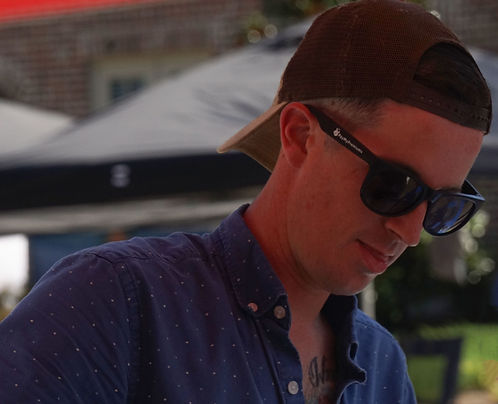
“If you find yourself in need of acute mental health services in the moment and may need admission, they have beds for that,” Dustyn Baker, a child and adolescent psychiatrist who trained at Pine Grove during his medical schooling, said.
During Evans’ seven days recovering from his alcoholism and mental turmoil, he received a variety of services and medication to help his condition. According to Baker, treatment at Pine Grove and other mental health centers is evidence-based, following a careful track to treat a variety of individual issues.
Following Evans’ personally tailored rehabilitation, he needed extended care, which complicated things. Evans’ income wouldn’t be able to cover nearly any mental health services, and he had no government-aid alternative.
His search lead him to the USM’s School of Psychology offered financially adjustable mental healthcare services for people seeking affordable treatment. Being Evans’ only financially available avenue, the USM alum entered the program and got screened by a Ph.D. student.
“He called back like a week after the intake and said ‘Unfortunately, your situation is beyond the scope of our department,’” Evans said. While Evans does not blame USM or any part of the program, he says that option was his only affordable choice at the time.

Despite Mississippi’s overall ranking in mental health services improving significantly since Evans’ crisis, according to Mental Health America, the nation’s leading nonprofit seeking to alleviate mental illness, the Magnolia State remains near the bottom for access to care.
“As far as the state, in general, there have always been less resources, it feels like, than what we would ideally have in the mental health field,” Haylee Green, assistant manager of Hattiesburg Clinic Connections and Psychology & Counseling, said.

The clinic sees 250-300 patients per day, according to Green. Treatment options start for patients as young as ages 3 or 4, but coverage fluctuates with the individual case. According to Green, this means the best coverage options depend on the person.
According to the National Alliance on Mental Illness, as of 2021, nearly half of Mississippi adults who needed but did not receive mental healthcare claimed the reason was cost. Mental Health America’s 2023 report corroborates that claim, again siting Medicaid coverage as a key to reducing disparities for access to care.
In seeking free mental healthcare, Treani Richardson, a junior therapeutic recreations major from Pascagoula, reached out to Student Counseling Services at USM for free counseling sessions. However, she said unclear availability of USM’s service drove her away. Thankfully, her employer, Target, offers coverage for mental healthcare in a variety of forms, including Richardson’s virtual meetings with doctors at her convenience.

Richardson said availability and coverage is vital, and it’s an aspect of mental healthcare she found lacking at USM. “It’s like everybody ignores it until there’s a big news line on it, and now everybody is interested in mental health,” Richardson said about the institution. She remains thankful that her work gives her the option to seek help.
Evans needed the same. Lack of extended care pushed him back into self-medication with alcohol, driving him deeper into the hole he had been in before. Alcohol and lack of eating dropped his weight significantly, and by the summer of 2021, Evans couldn’t get up from the ground without help. His habits were killing him, and he didn’t even know until then.

“You put a frog in water and slowly turn up the temperature, the frog never realizes it’s about to boil and be cooked to death,” Evans said. That realization brought him back to Pine Grove. Thankfully, his new job’s no-copay mental health services plan covered 24 days of treatment.
Even though his insurance coverage ended after that period, Evans considers himself lucky to have kicked his old habits permanently. Regardless, he still says more care in the Hattiesburg area is needed.
Understanding the systemic issues, such as lack of state funding and limited care availability, is key to destroying the barriers that prevent mental healthcare in Hattiesburg. The suffering of the community is real, but hope lingers on individuals willing to press for change.